Legacy Planning
Here you can find information on archiving artwork, including storage, digital archives, and realistic thoughts on what will happen to artwork when the artist and/or collector dies.
AN ARTIST’S LEGACY
My Personal Perspective by Artist Member Barbara Houghton, 2025
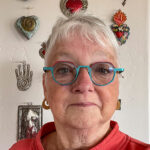
As an artist who taught for 41 years in two departments of art, teaching three courses most semesters as well as in the summer and on study abroad programs, while always producing work in my own studio, I have many ways to think about legacy. I graduated from the MFA program at the School of the Art Institute of Chicago in 1973. There were many classmates in the Photography Program and many more throughout the School who went on to make their artwork known both in their communities and nationwide. I was just one of many.
To support my art making and my life in general, I applied for and was hired to start a photography program at Metropolitan State College (now Metropolitan State University) in Denver. My students were mostly “second-time-around” students—people who had not taken their first opportunity at a university seriously, but who were now deeply committed and eager to learn as much as possible as quickly as possible. Many were close to my own age, and they demanded that I stay fully engaged and on my toes at all times. It was a glorious way to begin a career.
My philosophy of teaching was that I could not ask my students to work if I was not also fully engaged in my own art making. I expected us to talk seriously about ideas and methods and to look at as much work by other artists and photographers as possible. It was important to me that students study art history, which I believe is the history of ideas, in order to help them find their way in the world and discover their own voices. My dear friend Robert Heinecken once told me to teach what I love and to tell students why. That advice served me well throughout my career.
I ended my teaching career at Northern Kentucky University, where the student population was much younger and cell phones had become part of daily life. There, a colleague and I moved the photography program from analog to digital. We were ahead of most other universities when we made that decision. I had already been working digitally before arriving in Kentucky, and my colleague was on the cusp of that transition.
When thinking about legacy in a digital world, the considerations are very different. Instead of boxes of printed photographs, we now have thousands of images that may never exist physically. An artist’s archive becomes dependent on how much digital storage one can afford. Making photographs can feel endless, no longer constrained by the size of a roll of film, and as a result our archives have become enormous.
Many artists I know are now seeking to place their archives with museums as a way to control some aspect of their legacy. This is expensive for museums, which must acquire, catalog, and store these materials, all while facing serious funding challenges. I am not looking to do this. I do not consider myself important enough to ask a museum to take on that responsibility. While my work exists in several museum collections, and that is gratifying, being considered an “important” artist has never been my goal.
Instead, I see my legacy in the many former students who found their voices, who continue to make art or support the work of others. I see it in the values, work ethic, and critical thinking that developed in those I taught. I am proud that so many remain in the field and that many are still my friends.
I came from a very large, working-class family, where we were taught to share everything. For me, sharing my work, my ideas, my materials, and my life feels like the truest legacy I can leave.
Resource List:
The Joan Mitchell Foundation
The Creating a Living Legacy (CALL) initiative provides artists with resources and instruction in the areas of career documentation, inventory management, and legacy planning.
How to Donate an Art Collection
There are a number of reasons that could lead you to donate your artwork. The first step is to track down and compile the provenance documents, artist name, materials used, recent appraisal, and dimensions. Find out the next steps in this article.
Insights on Donating Artwork to Museums
Giving art to an art museum should be a no-brainer, but, in fact, many museums reject far more proposed donations than they accept. “Ninety to ninety-five percent of material that is offered to museums is declined,” says Michael Duffy, national head of art and collectibles planning in the private banking division at Bank of America. Find out why in this article.
Support a Charity with Art Donations
Those who own works of art can use that art effectively to support charity. Individual donors may be eligible for an income tax deduction for the charitable gift of the artwork and may also avoid paying tax on capital gain if the art has appreciated in value. Learn more about important tax deductions for donating art in this article.